
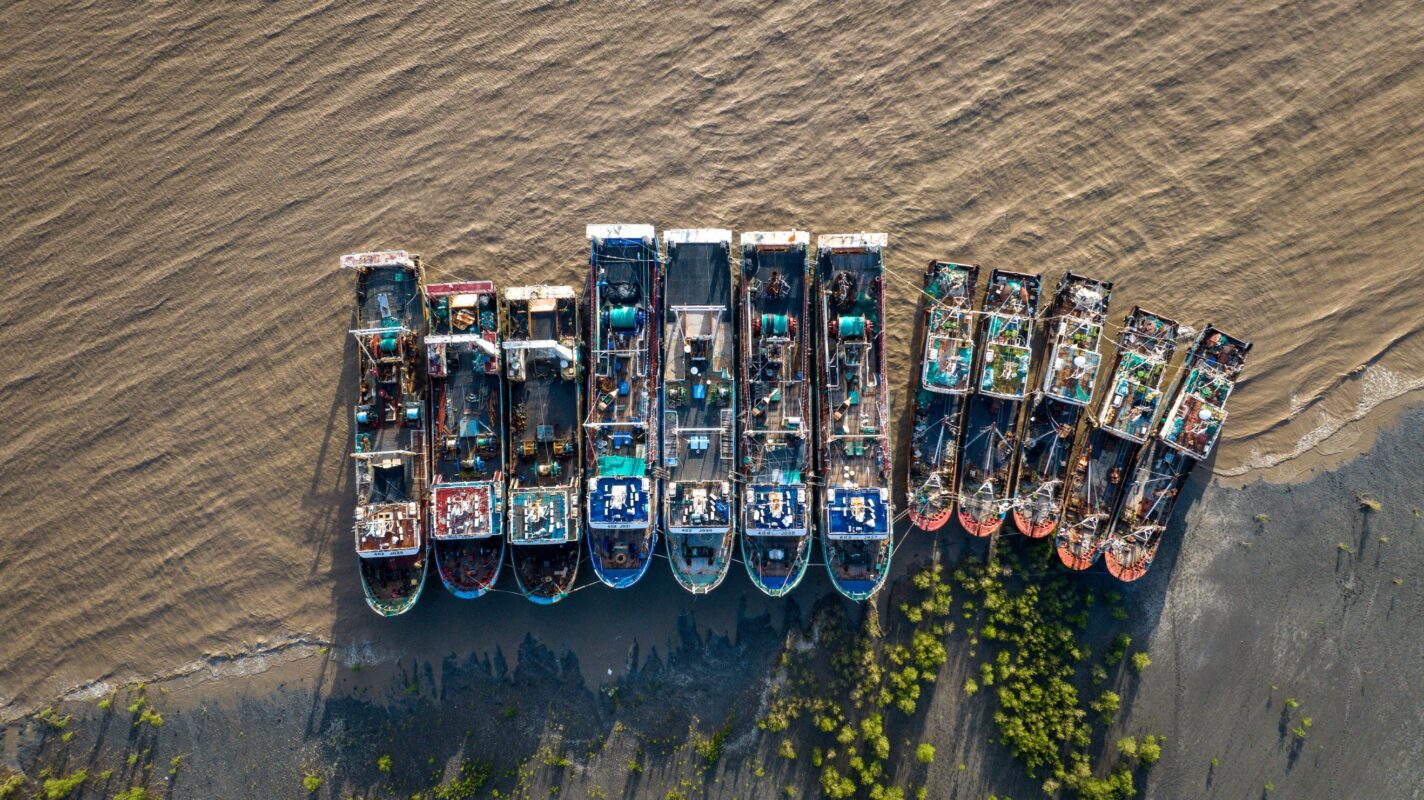
Washington, D.C. – February 25, 2026 – The Coalition for Fisheries Transparency (CFT) welcomes the full ratification of the Cape Town Agreement, a major ocean treaty aiming to protect fishers’ lives at sea, which will help deter illegal, unreported and unregulated (IUU) fishing activities and is a key component of the Global Charter for Fisheries Transparency.
The Cape Town Agreement is a binding treaty through the International Maritime Organization (IMO) designed to enhance the safety of crew working on large commercial fishing vessels through essential safety standards on fire safety, life-saving appliances, emergency procedures, radiocommunications, vessel stability, and seaworthiness. Until the Cape Town Agreement enters into force, there are no mandatory global safety regulations for fishing vessels.
With the ratification of the Solomon Islands, South Korea and Argentina, the Cape Town Agreement for the Safety of Fishing Vessels is now fully ratified, with 28 Parties representing 3,754 fishing vessels, paving the way for its entry into force in a year’s time.
Maisie Pigeon, Director of the Coalition for Fisheries Transparency, said “While fishing is one of the most dangerous occupations in the world, the Cape Town Agreement will ensure global minimum safety standards are in place for the benefit of all fishers operating on large commercial fishing vessels worldwide. This Agreement is a key measure of worker safety as outlined in the Global Charter for Fisheries Transparency and will lead to a more transparent, accountable, and sustainable global ocean.”
Fishing remains an extremely dangerous occupation, with a recent study showing more than 100,000 fatalities annually in the global fishing sector. Vessel safety and IUU fishing are closely linked, as operators who engage in IUU are less likely to maintain adequate working conditions, training, or safety equipment, according to the United Nations.
With an estimated 45,000 fishing vessels over 24 meters in length across the world, the Cape Town Agreement holds immense potential to enhance the safety standards of large-scale fisheries. Safe and healthy crews are an essential part of successful fisheries, making the Cape Town Agreement an important instrument alongside other standards including the Food and Agriculture Organization’s Port States Measures Agreement and the International Labor Organization’s Work in Fishing Convention (No. C188).
Ambassador Peter Thomson, UN Secretary-General’s Special Envoy for the Ocean, said, “I welcome the full ratification of the IMO Cape Town Agreement. It represents a double win for the world: firstly, for the safety of fishers around the world and thereby the well-being of their families; and secondly, for the International Maritime Organization’s momentum. Coming on the heels of the ratification of the BBNJ High Seas Treaty and the WTO Agreement on Fisheries Subsidies, the ratification of the IMO Cape Town Agreement is turning 2026 into a watershed year for ocean action.”
Milko Schvartzman, Oceans Program coordinator at the Círculo de Políticas Ambientales (Argentina), said, “The Cape Town Agreement will impose stricter global standards on crew safety and working conditions. Once in force, it will help combat human exploitation, resource depletion, and IUU fishing—particularly in vulnerable regions like the Southwest Atlantic. Its entry into force now with Argentina’s ratification will not only save lives at sea but also strengthen the fight against IUU fishing that severely affects developing countries across Latin America.”
Safety at sea became a global priority following the Titanic disaster in 1912. While diplomatic efforts led to the adoption of the International Convention for the Safety of Life at Sea in 1974 – which applies to shipping vessels – no equivalent treaty ever entered into force for fishing vessels, despite multiple attempts in 1977 and 1993.
Vivien Deloge, UK Coordinator of the Coalition for Fisheries Transparency, said, “The upcoming entry into force of the Cape Town Agreement will put an end to a very long wait – half a century – to grant fishers international standards of protection at sea. The Coalition encourages all remaining IMO Member States to follow suit and ratify the Agreement to ensure its widespread implementation so as to further advance fisheries transparency worldwide.”
Parties to the Cape Town Agreement will have the possibility to inspect the safety of fishing vessels and their crews, enhancing transparency of fishing activities and strengthening safe, legal and sustainable fishing worldwide.
###
The Coalition for Fisheries Transparency is a global network of more than fifty global civil society organisations that work together to improve transparency and accountability in fisheries governance and management. Learn more at fisheriestransparency.net.
Contact:
Chip Weiskotten, Sr. Communications Manager, CFT
chip@fisheriestransparency.net
+1 518-669-3936